FRANCHISEX COMMUNITY · AI & TECHNOLOGY
Are 10,000 hours with AI worth it?
Online → Offline → Online
From work used in practice to experience worth sharing
By Aod · Banjerd Yodsiri · FranchiseX
Published 26 October 2026 · Thailand time (Asia/Bangkok)
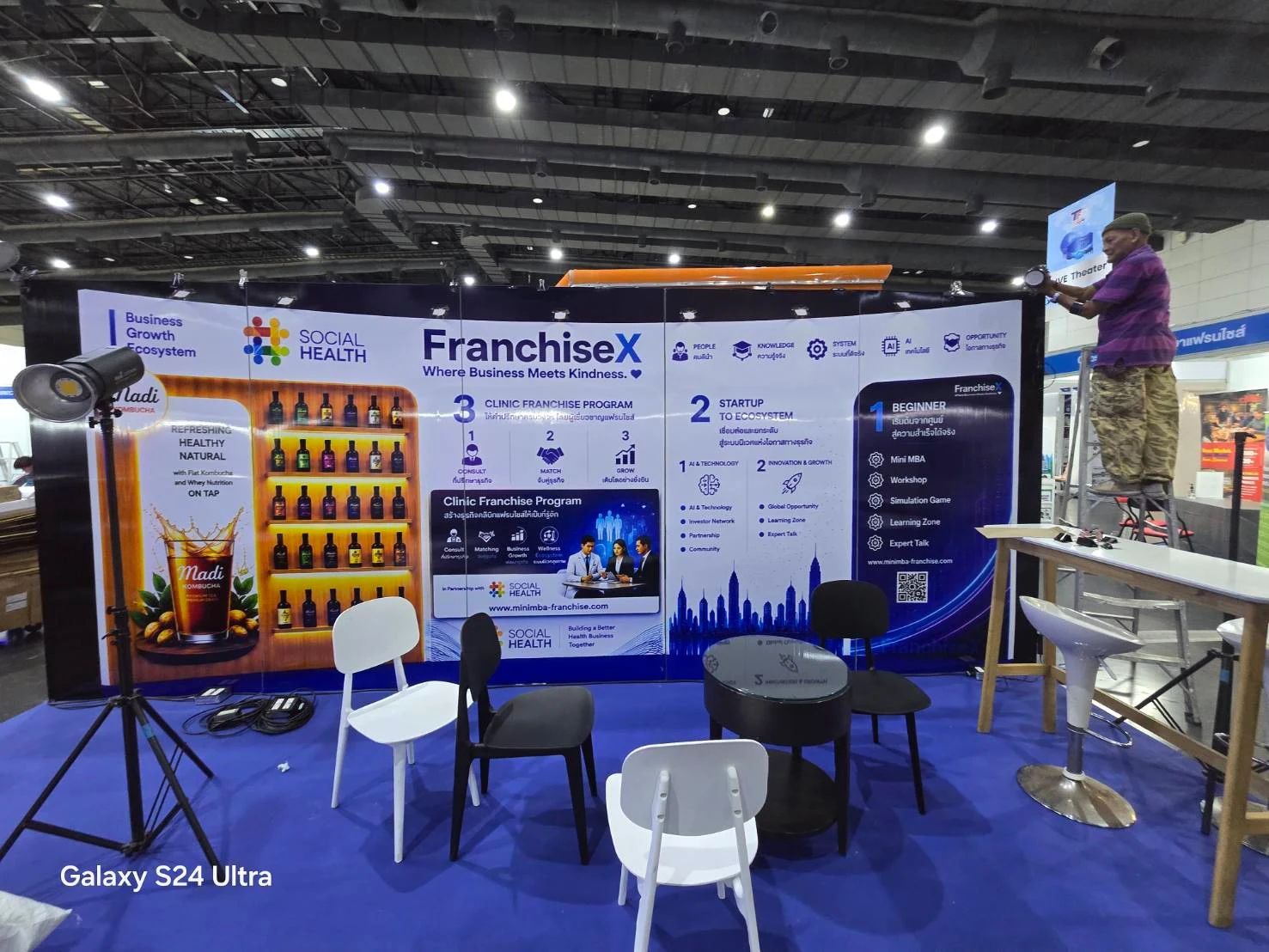
If we added up the time we spend working with AI, what would we have to show for it?
I use “10,000 hours” as a question to reflect on. I have not logged every session, so I am not claiming that I have completed that many hours.
Since I began using it in 2023, more than three years have passed. I have work to review, images to compare and materials that have been used in practice. That is where I look for value.
From a screen to a place where people can meet
At first, asking questions, drafting text and making images can be enjoyable. But using an image for a business introduces many more details. Is the name correct? Is it the right logo? Is the text readable? Does the audience understand what we do?
Printing adds further questions. What is the physical size? Will people obscure the words? Where will tables and chairs go? Can a file that looks good on a screen work across a booth wall?
The FranchiseX work now includes photographs of a real booth, printed walls, a discussion area and people using the space. I have also used work for TDWI and LVL 10:10 in practice.
Business experience can inform work with AI. People still need to judge what is correct, what can be used and what must be fixed first.
Online → Offline → Online
This is the approach I want to teach. Begin online with a real problem, source information, wording, images and a way to explain the work. Take it offline into an actual place with real people and real constraints.
Then return online with photographs, articles and case studies that help others understand the work. Collect evidence about what to continue and what to improve. Keeping our decisions and revisions gives the next project a useful starting point.
The rejected versions are useful too
My work includes images I did not like, versions that needed real photographs, text corrections and designs that needed fewer elements. These can teach us where a brief was unclear, why a change was needed and what still required checking.
With real people, a photograph must match the person and event. If the source cuts someone off at the edge, find a wider original. Do not invent the missing person and use that as evidence. A finished image alone cannot teach this process.
Turning experience into 7 STEP AI TO BUSINESS
I want learners to start with their own work and move through it step by step.
1. Choose the business problem Identify who you are helping, the problem and the action you want them to take. Produce a clear brief rather than the vague instruction “make it beautiful.”
2. Set goals and measures Agree what usable work looks like and how to check accuracy, understanding, time or enquiries. Leave missing data open to be collected rather than inventing it.
3. Prepare the information Bring together the correct logos, original photographs, text, dates and product facts. Incorrect inputs can lead to incorrect outputs.
4. Choose tools and design the workflow Write a task-specific prompt. Decide what AI assists with, what people review and where original assets should be used instead of generated replacements.
5. Run a small trial Try one piece or one size with actual reviewers, collect feedback and revise. Do not expand merely because you personally like the image.
6. Check quality and risk Review text, people, logos, links and the intended use. Online and printed work have different checks. The responsible person needs to see the work before release.
7. Measure and expand Review real results. Keep what works as a template and improve what does not. If something has not been measured, say so rather than adding impressive-looking numbers.
Each step can become a short lesson with a tangible deliverable, then connect into one project. Learners can see what they can now do, rather than simply memorising tool names.
Free lessons or paid teaching?
Some knowledge can be shared freely to help people begin. Learning with a specific project, practice, review and individual guidance needs a clear scope and value before setting a fee.
I want learners to gain a way of thinking and work they can apply to their own situation, not a promise of a particular income.
Before calling the effort worthwhile, I also need to ask how many outputs were actually used, whether repeated revisions fell, whether information became more accurate and where decisions improved. Claims about saved time or business outcomes need actual records and measurement.
Are 10,000 hours with AI worth it?
My answer today is that there are useful outputs and experience I can share. The financial return needs evidence from each project. Time becomes valuable when we use what we have learned to improve, and help those starting later avoid repeating every mistake.
People set the goals • AI helps with the work • People remain responsible for the outcomes
Aod | FranchiseX
Photographs from the actual setting
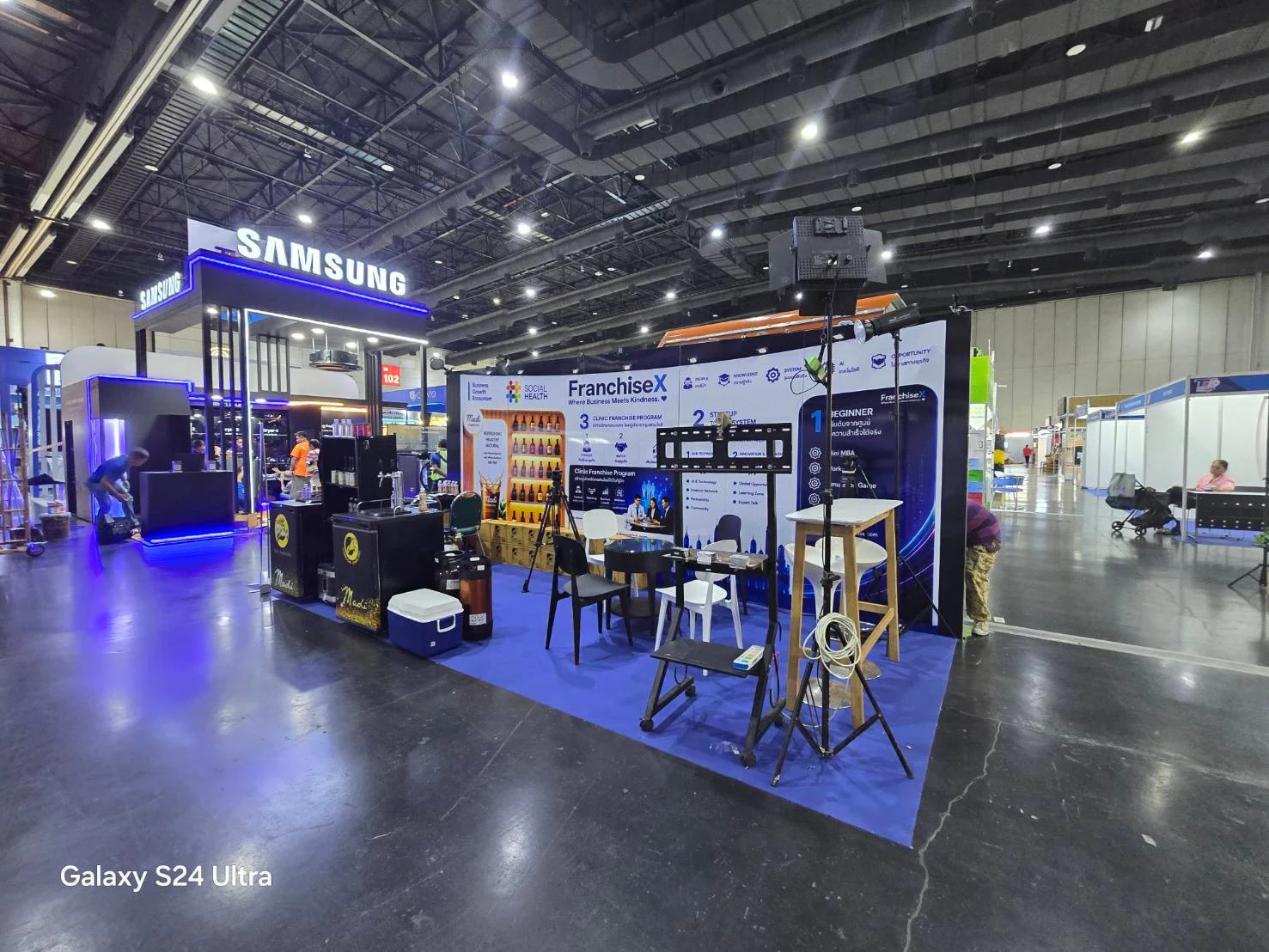

These photographs show production, installation and use of the space. They do not establish customer counts, sales or financial returns, nor an event date or location from the images alone.