· Notes from Taiwan
Several days in Taiwan…connecting what we learn with AI, IoT and n8n
How can the technology we see help entrepreneurs back home?
Free to read. No membership required.
By Aod — Banjerd Yodsiri · TDWI / FranchiseX
Several days in Taiwan…walking, exploring and talking with knowledgeable people. There is plenty to think about and take home.
This trip brings together the water business, new technology and a chance for my daughter Praewa to learn from real business settings. I want to bring back ideas that entrepreneurs can explore in their own work.
Today I would like to share how my experience in measurement and control, seed operations and the water industry can connect with AI, IoT and a tool called n8n.
01 / Meeting knowledgeable people and asking useful questions

I visited Taiwan International Water Week 2026 and saw measurement equipment, filtration systems and approaches to water management. The photos and stories I shared earlier capture parts of that learning journey.
When I see a new instrument, I want to ask: what does it measure? How reliable is the data? How could a small business use it to address a specific problem?
My background is in measurement and control engineering, with 26 years of engineering experience. New technology gives me a reason to revisit that experience and consider what fits each entrepreneur’s needs and resources.
02 / Too much water, too little water, suitable water…data comes first
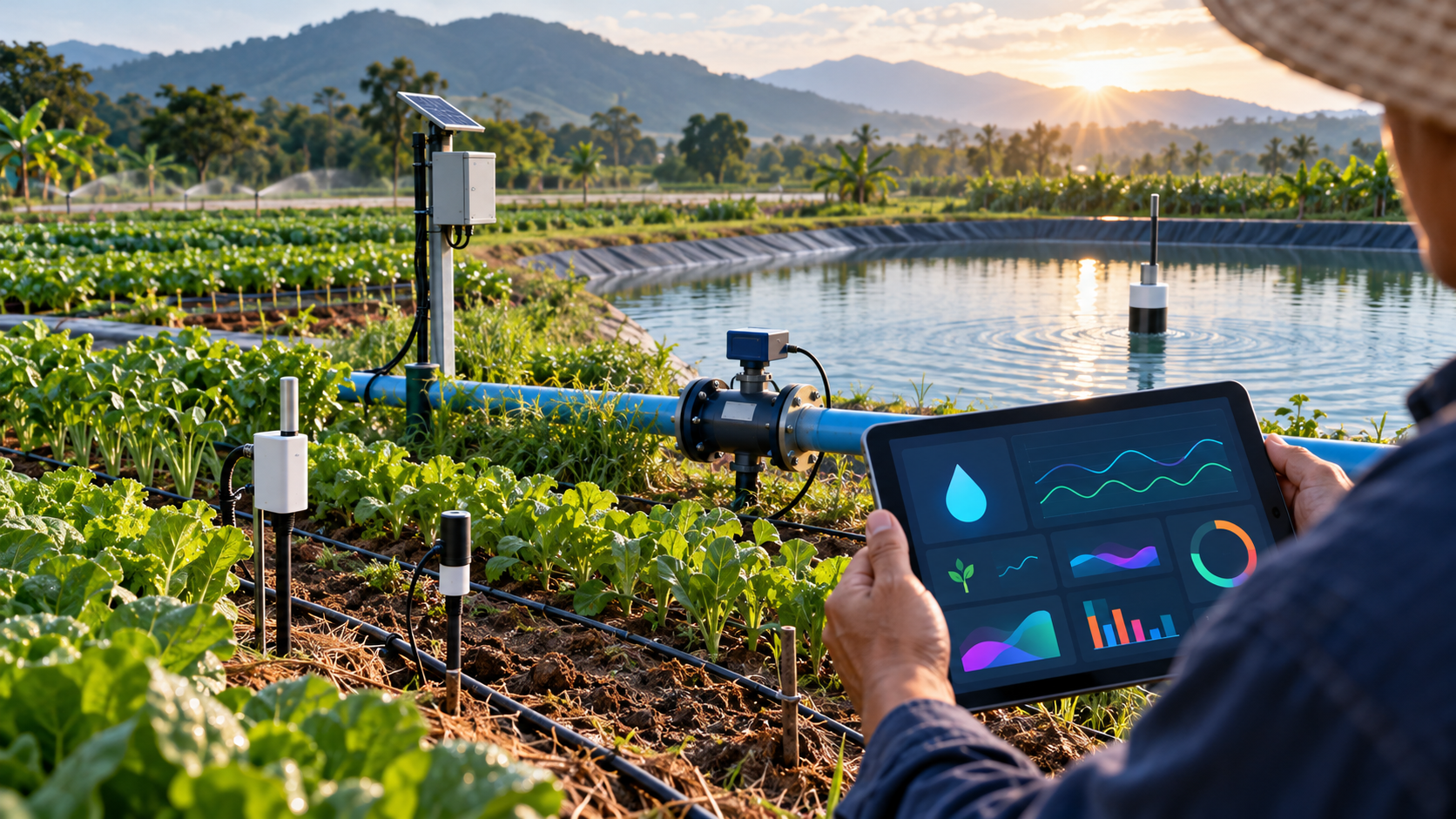
Water management in agriculture begins with everyday questions. How do we manage excess water? Will limited supplies be enough? Is the water suitable for the crops and the way we use it?
We need to understand the planted area, crop type, growth stage, soil conditions, usable storage and actual delivery rate. Water quality testing should reflect the risks involved. A pH or EC reading alone cannot establish suitability for every use. [1]
IoT can transmit field data for monitoring. People still need to check timestamps, units, installation locations and instrument calibration. Errors in the inputs can carry through to the analysis.
We have started with a simple planted-area and water-planning calculator. Users can adjust assumptions and compare the results. Connecting it to AI, sensors and n8n remains a proposed next step, rather than an already installed, complete system.
03 / Nodemation connects work steps so data reaches the right person
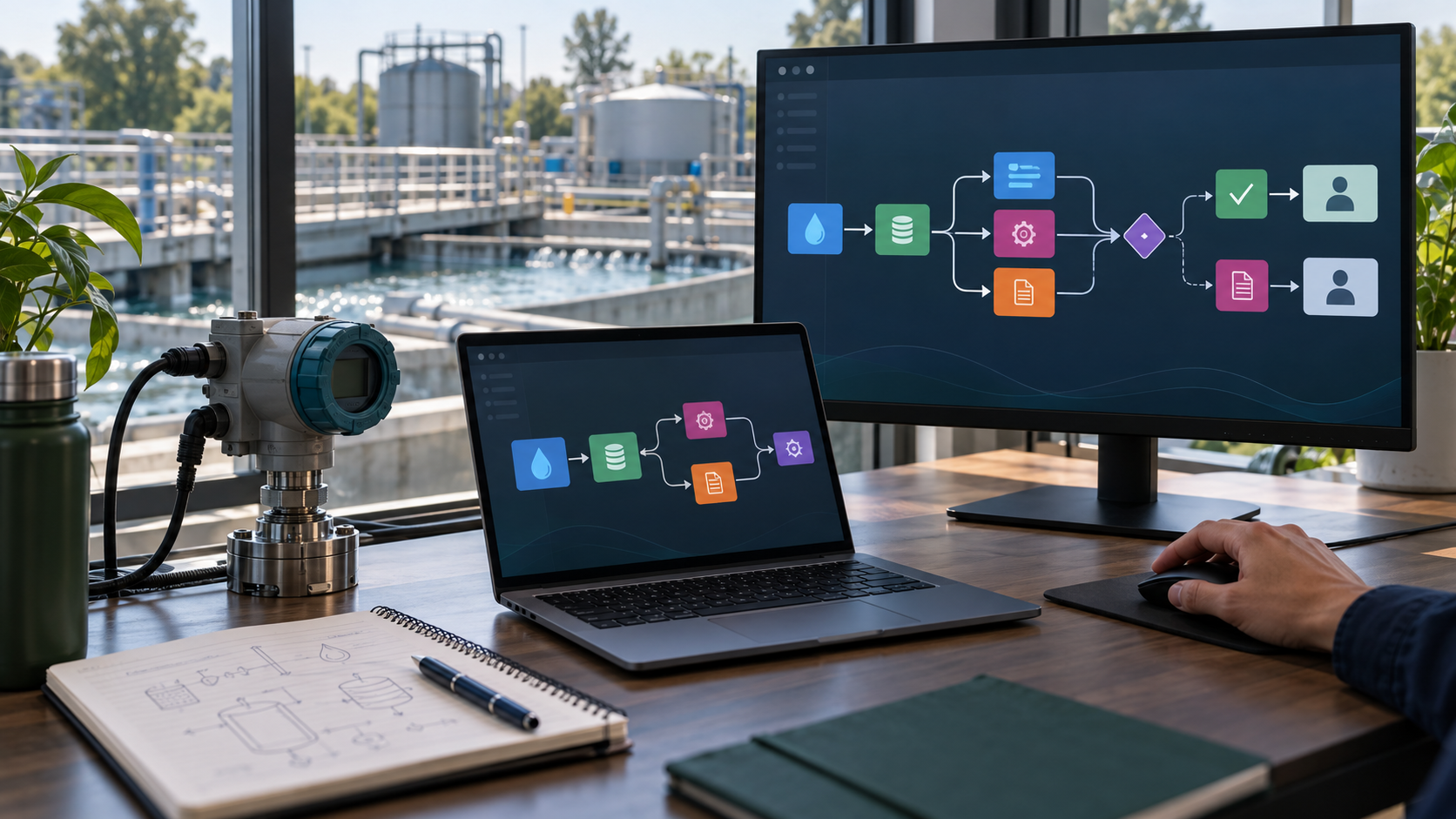
Another idea worth exploring is n8n, pronounced “n-eight-n.” The name comes from Nodemation. “Node” refers to its connected node view and Node.js, while “automation” describes the work it helps automate. [3]
Imagine one step receiving a measurement, another checking whether the data is complete, and the next comparing it with an agreed threshold. It then passes the information to the person responsible. Connecting these steps creates a workflow.
For water operations, a possible workflow would receive level and flow readings, validate and store them, then alert a supervisor when something needs attention. AI could help summarize trends and explain the available data, with references to the readings it received.
Calculations and threshold checks can use defined rules. AI does not have to make every decision. n8n offers Webhook and MQTT integrations that can be considered according to the system’s requirements. [4]
- Receive IoT dataRecord units and time
- Validate inputsCheck completeness and freshness
- Compare thresholdsUse defined rules
- AI summarizesShow limitations
- A person checksReview before approving changes
The approach could extend to water plants, food and beverage operations, or machinery monitoring. Each application needs its own design and testing. Machinery control and protective systems must continue to perform their independent roles.
04 / On 28 October, let’s discuss how to use AI responsibly
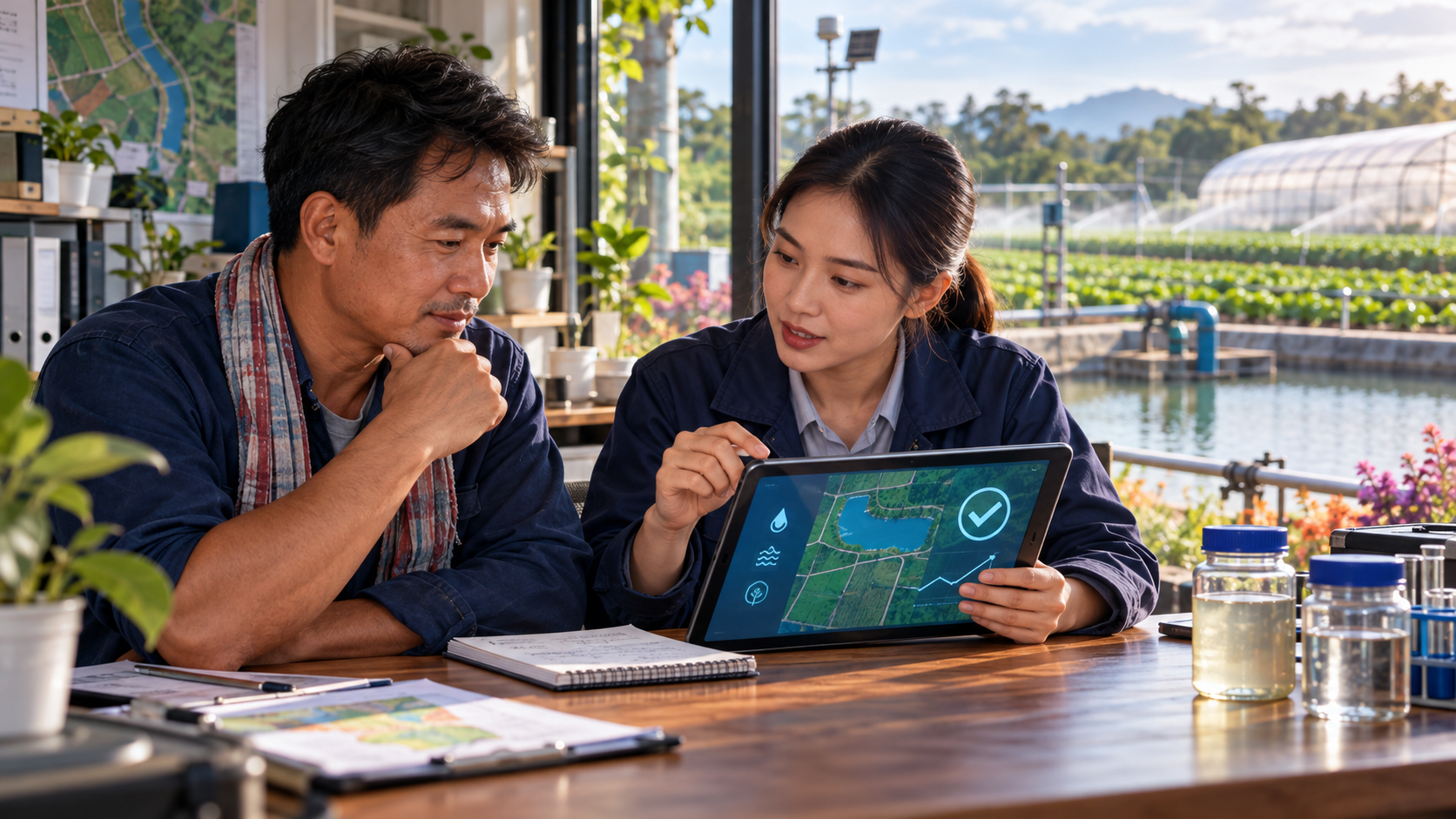
On 28 October, I will share water industry experience and these ideas at the online agriculture and food session of “รู้ทัน AI ใช้อย่างมั่นใจและมีจริยธรรม,” an event about informed, confident and ethical AI use.
What happens when a sensor fails, readings become stale, or AI explains more than the data supports? How would we notice? Who checks? Which actions should wait for human approval?
These questions can help entrepreneurs design their processes: verify inputs, limit access and the data sent to AI services, and assign responsibility. n8n supports human approval or rejection before selected AI tool calls, but the review steps must be configured and tested for the risks involved. [5]
A small trial is a reasonable starting point. Choose one plot or one location in a plant, record the baseline, and change one thing at a time. Compare water use, costs, quality and abnormal events before deciding whether to expand.
Coming back from Taiwan… I want to connect what we have seen with what we know how to do, and invite entrepreneurs to learn and experiment together.
If you have a challenge involving water, data or work processes, come and exchange ideas with FranchiseX Community.
Aod
Connect • Learn • Grow • Sustain